DrinksMix.Net - Easy and Simple Drink Recipes

Mango Pineapple Smoothie Recipe-How to Prepare a Refreshing and Healthy Tropical Drink

This Mango Pineapple Smoothie recipe is bright, tropical, and wonderfully refreshing, blending two sunny fruits into one creamy, flavorful drink. Sweet mango and juicy pineapple come together for a naturally vibrant taste that feels like a mini vacation. It’s perfect for breakfast, post-workout refueling, or a refreshing afternoon treat.
Essential Ingredients for Mango Pineapple Smoothie Recipe
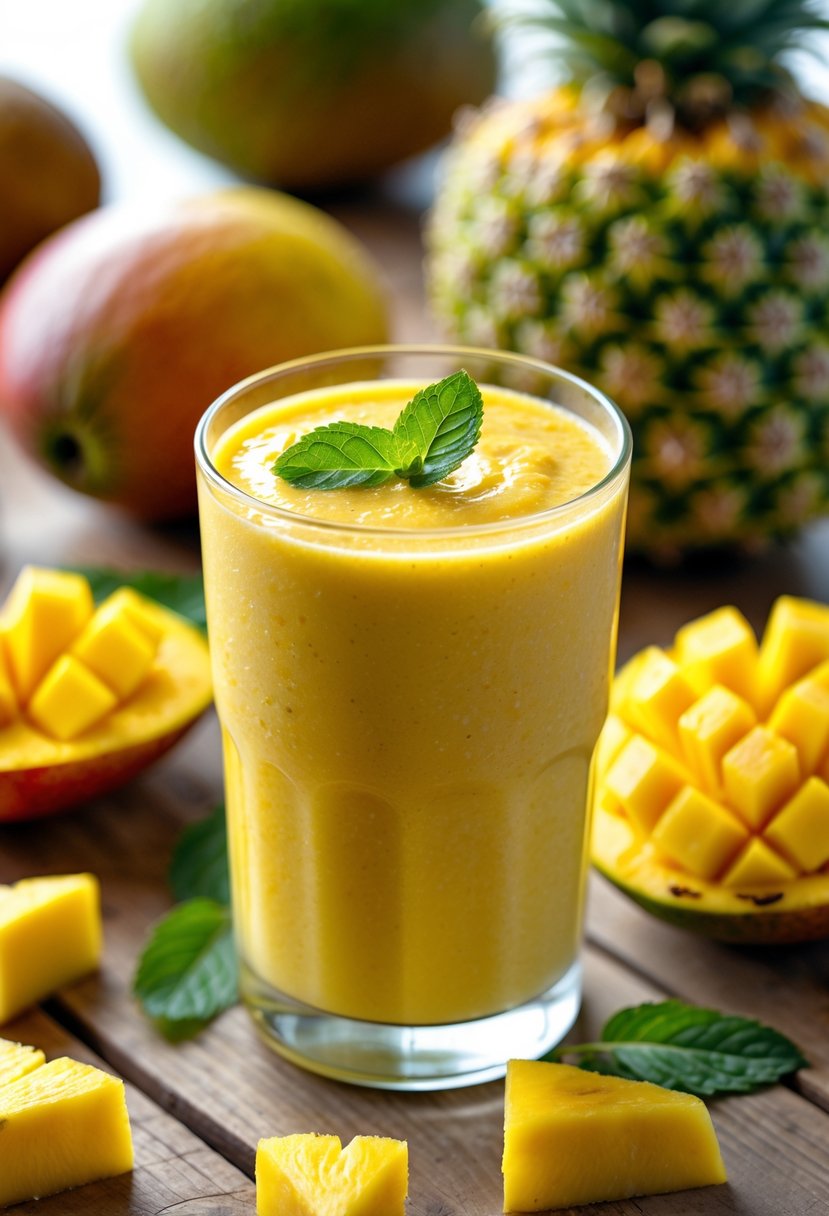
If you’re craving a good mango pineapple smoothie, you’ll want some fresh or frozen fruit. You also need a bit of liquid or maybe some yogurt for that creamy vibe.
A few extras, like honey or ice, can help you tweak sweetness or thickness. The fruit you pick and any add-ins really shape the taste and how smooth it turns out.
Choosing the Best Mango and Pineapple
Go for ripe mangoes that feel soft but not squishy. I usually like Ataulfo or Haden—they’re sweet and juicy.
With pineapples, sniff for a sweet smell and make sure they’re firm. Avoid anything that’s super green or turning brown.
Frozen mango or pineapple is totally fine if fresh isn’t around. It’s actually picked and frozen when it’s ripe, so you don’t lose out on flavor or nutrients.
Using Fresh, Frozen, or Canned Fruit
Fresh fruit gives you the brightest flavor and the best texture. If you can, use ripe mango and pineapple chunks.
Frozen fruit is a lifesaver—just toss it in and your smoothie stays cold without needing ice. Plus, you skip some chopping.
Canned pineapple works in a pinch, but pick the kind in water or juice, not syrup. Drain it well so your drink doesn’t get too sweet or watery.
Optional Sweeteners and Add-Ins
Sometimes your fruit just isn’t sweet enough. Add a teaspoon of honey if you want, and taste as you go.
Greek yogurt is great for creaminess and adds a bit of protein. It won’t make things too sweet, just smooth.
If you’re only using fresh fruit, toss in some ice cubes to chill and thicken it up. Some people add water, milk, or juice to loosen things if it’s too thick.
Step-by-Step Preparation Guide
This smoothie is honestly pretty simple to put together. You just prep your fruit, blend it up, and then serve.
A little care at each step helps you get that perfect smooth texture and tropical flavor.
Preparing Pineapple and Mango
First, pick out ripe fruit. For pineapple, chop off the top and bottom, then carefully slice away the skin.
Cut it into small chunks and get rid of the tough core. For mango, wash it, slice along the seed, and scoop out the flesh.
Cut the mango into cubes, about an inch big. You’ll want around 1 cup of mango and 1 cup of pineapple chunks per serving.
This part takes maybe 10 minutes. Using fresh fruit makes the smoothie taste way better.
Blending Techniques for Smooth Consistency
Start by tossing your fruit chunks into the blender. Add about half to three-quarters of a cup of cold water or juice.
If you like it creamier, add some yogurt or ice cubes. Begin blending on low to break things up, then switch to medium-high for about 30-45 seconds.
Check the texture—if it’s too thick, splash in more liquid and blend again. Try not to over-blend.
You just want it smooth, with no big chunks left. The whole blending part shouldn’t take more than a couple of minutes.
Serving and Storage Tips
Pour your smoothie into a tall glass right away. Garnish with a slice of pineapple or mango if you’re feeling fancy.
Usually, one serving is about 1 to 1.5 cups. If you have extra, pop it in an airtight container in the fridge.
Try to drink it within 24 hours for the best flavor and nutrition. Give it a good stir before drinking, since it might separate a bit.
Freezing isn’t the best idea—it messes with the texture.
Nutritional Insights and Health Benefits
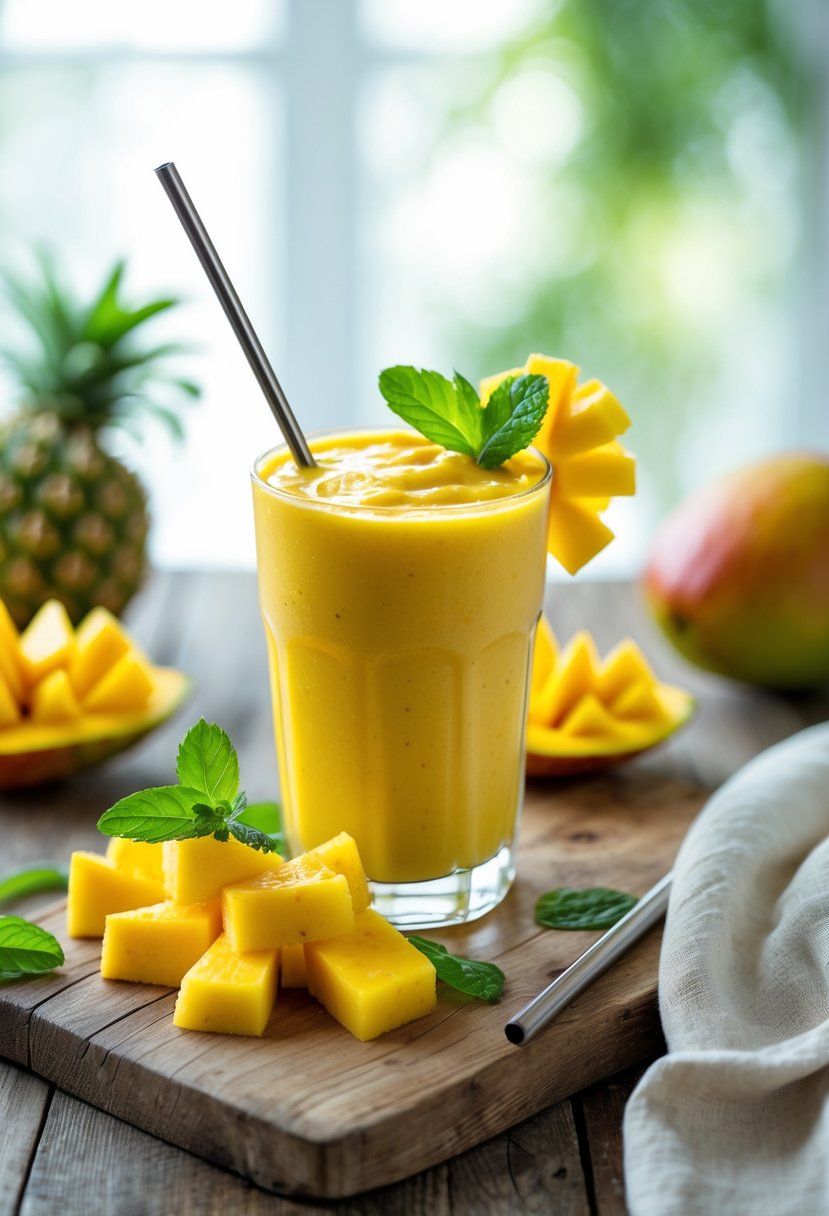
This smoothie is a pretty balanced snack or light meal. It’s easy to adjust for different diets, and it’s a nice way to sneak in more fruit.
Calories and Macronutrient Breakdown
A typical mango pineapple smoothie clocks in at about 150-200 calories per serving. Most of those calories come from the natural sugars in the fruit.
Carbs are usually around 35-45 grams, with a good chunk coming from fiber, which helps keep you full. Fat is low, maybe 1-3 grams, unless you add something rich.
Protein is also pretty low, about 1-3 grams unless you boost it with yogurt or protein powder.
So, it’s light and refreshing, with enough carbs to give you a little energy.
Protein Content and Vegan Options
If you want more protein, you can toss in some pea, hemp, or soy protein powder. That’s especially handy for vegans.
Using almond or oat milk keeps it dairy-free and cuts a few calories. Adding a spoonful of chia or flaxseeds bumps up the protein and healthy fats too.
You can really make this smoothie fit your needs, whether you’re vegan or just want a little more nutrition.
Nutrition Information for Healthy Smoothies
A good smoothie should have vitamins, minerals, and fiber, but not a ton of added sugar or fat. Mango and pineapple both pack a lot of vitamin C, vitamin A, and antioxidants.
The fiber helps with digestion and keeps you satisfied. Try not to add too much sugar or any weird sweeteners.
If you want to sneak in extra nutrition, add a handful of spinach or a scoop of protein. It won’t change the flavor much, but your body will thank you.
Stick with whole, natural ingredients for the best results.
Creative Variations and Serving Ideas
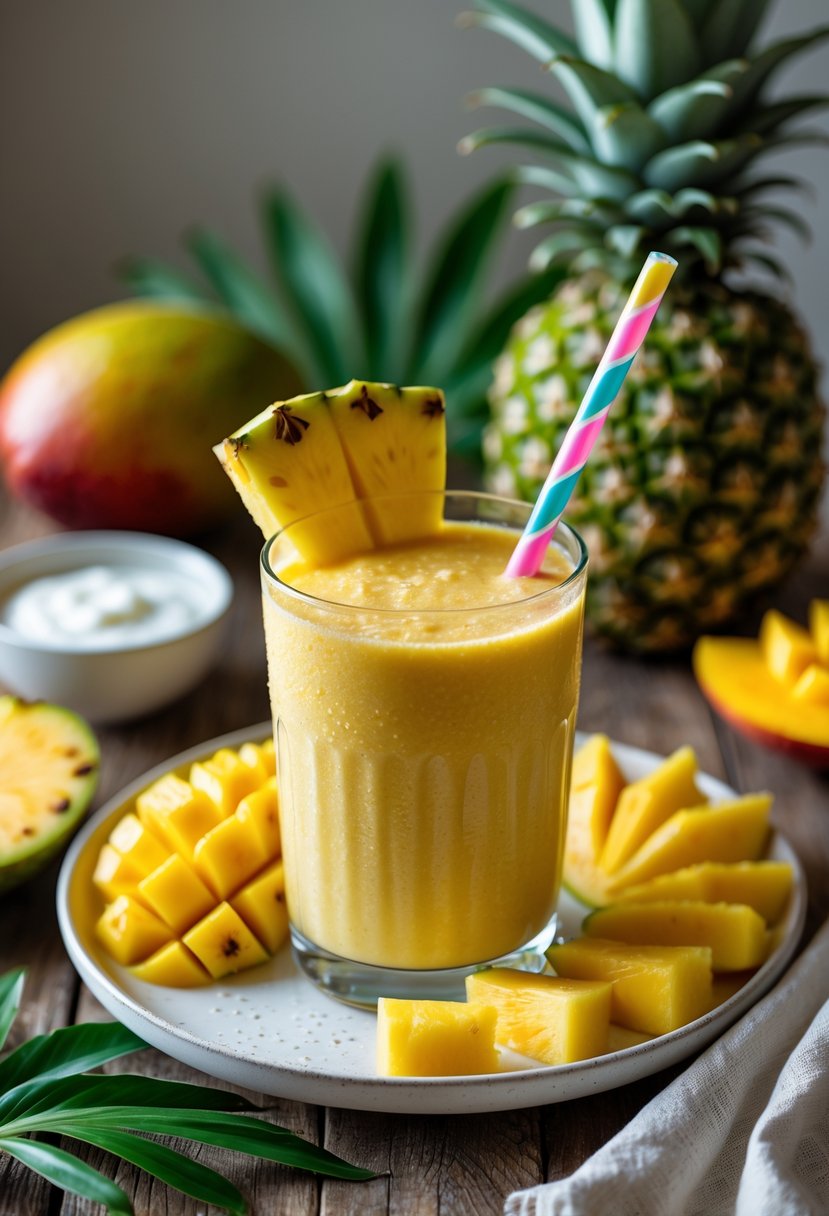
This smoothie can work in lots of different ways. It’s quick for breakfast or a nice pick-me-up in the afternoon.
You can also tweak it to taste like those fancy store-bought smoothies.
Mango Pineapple Smoothie as Breakfast or Snack
It’s great as a light breakfast or a quick snack. If you want it more filling, add Greek yogurt or a scoop of protein powder.
That way, you’ll have energy and stay full longer. For a lighter snack, just use mango, pineapple, and maybe a splash of juice or water.
Toss in some ice for a chilly treat. If you want a little crunch, sprinkle chia seeds or granola on top.
It’s a fun way to mix up the texture and add some extra nutrients.
Inspired by McDonald’s Smoothies
Ever crave a McDonald’s smoothie but don’t want to make the trip? You can actually whip up something pretty close at home with this easy recipe.
McDonald’s usually tosses in some low-fat yogurt and a touch of sweetener. If you’re aiming for that creamy, just-sweet-enough vibe, you can do the same.
Just blend up some mango, pineapple, a scoop of low-fat yogurt, and a drizzle of honey or agave syrup. Taste it—maybe you’ll want a little more sweetness or a little less. Totally up to you.
Frozen fruit works wonders if you want that thick, icy texture, and you don’t even need to add ice.
Making it yourself means you get to pick the ingredients and control the sugar. Honestly, it feels a bit better than grabbing one at the drive-thru.
If you love tropical smoothies like this one, you might also enjoy the Tropical Green Smoothie, which combines fruity flavors with nourishing greens. The Raspberry Coconut Smoothie is another great option, offering a creamy tropical twist with berry notes. To explore more smoothies, refreshing drinks, and tropical blends, be sure to visit our blog and browse the full recipe collection.